Yes, pressure washing can damage wood. It can fur the grain, cut grooves into soft boards, and drive water behind siding and into the walls. None of that is a reason to never wash a house. It's a reason to know what bad washing looks like, and to ask the right questions before anyone points a wand at your siding or your deck.
A Cincinnati homeowner said it plainly on r/cincinnati this year, looking for someone to clean their siding: "I don't want to get someone that tries to power wash from the ground and shoots water all up in my house." That's the right worry. Most of the damage people find later comes from how the job was done, not from washing itself.
What pressure washing does to wood when it goes wrong
Wood isn't concrete. A patio can take a lot of water hitting it. A cedar board or a pine deck plank is softer, it has a grain, and it soaks water up. Wash it wrong and you leave marks that a coat of paint or stain won't hide.
Furred or raised grain
This is the one people ask about most. "Is this wood siding being permanently damaged by pressure washing?" is a real question from r/Home, and it usually comes with a photo of fuzzy, hairy-looking boards. That fuzz is wood fiber the water tore loose from the surface. The soft wood between the growth rings washes away faster than the hard rings, so the board ends up rough and ridged instead of flat.
Furred wood feels like a dry towel when you run your hand over it. It looks gray and dull even after it dries. Stain soaks into it unevenly and paint sits on top of loose fibers instead of solid wood. The fibers don't lie back down on their own. They have to come off before the next finish goes on.
Gouges and wand marks
Hold the tip too close, or stop moving it, and the water cuts a line into the board. On a deck you'll see stripes and lap marks where the wand paused. On siding you'll see short grooves, often at the height where somebody stood and swept the wand back and forth. Soft wood shows it worst. "Previous owner power washed the deck too hard" is how one r/Decks post described a deck like that. Gouges don't fill themselves in. They stay under every coat you put on top.
Water behind the siding and into the house
This is the damage you don't see the day of the wash. Lap siding is built to shed rain falling down. Spray it from below, aimed upward, and the water goes up under the laps, past the trim joints and around windows. It can soak the sheathing behind the siding and get into the wall.
The USDA Forest Products Laboratory's guidance on wood finishes says the end grain of wood "absorbs moisture much faster" than the face of the board, and that finishes generally fail at the end grain first. It also says moisture blisters can show up where water gets in through joints and end-grain areas of boards and siding. Those joints and board ends are exactly where an upward spray goes. Later, the paint near them can blister or peel, and nobody connects it to the wash.
The National Park Service's Preservation Brief 10, on paint problems on old exterior woodwork, puts peeling down to bare wood mostly on moisture that collects behind the paint. Washing that drives water up under the laps is one more way to put it there.
Washing mistakes that hurt the wood
A few habits cause most of the damage above.
- Blasting from the ground. Standing on the lawn and aiming the wand up at the second floor sends water under every lap on the way up. It's the exact thing the r/cincinnati post was worried about.
- Using pressure to do the cleaner's job. When mold or algae won't come off, cranking up the force and holding the tip closer is how wood gets furred and gouged.
- Washing and painting the same day. Wood that just took on a lot of water isn't ready for paint or stain. Ask whoever is doing the work how they decide it's dry.
- Treating every surface the same. Concrete, brick, vinyl, painted siding and a bare deck all take water differently. A crew that washes all of them the same way isn't paying attention to the wood.
- Painting over the fuzz. Furred fibers under a new coat lift and peel with the finish. The rough surface has to come off first.
How a wash should go
Our pressure washing for homes and patios runs in two steps. We spray a cleaning solution that kills mold and algae first, then pressure wash. Dark streaks on walls and patios can be mold and algae, and when they are, the solution is what kills them. The wash clears the surface after. Then we walk around the house with you when it's done.
That order matters for wood. When a cleaner does the killing, the wash doesn't have to be the thing that scrubs the growth off by force. That's the difference you're looking for in anyone you hire, whether it's us or someone else.
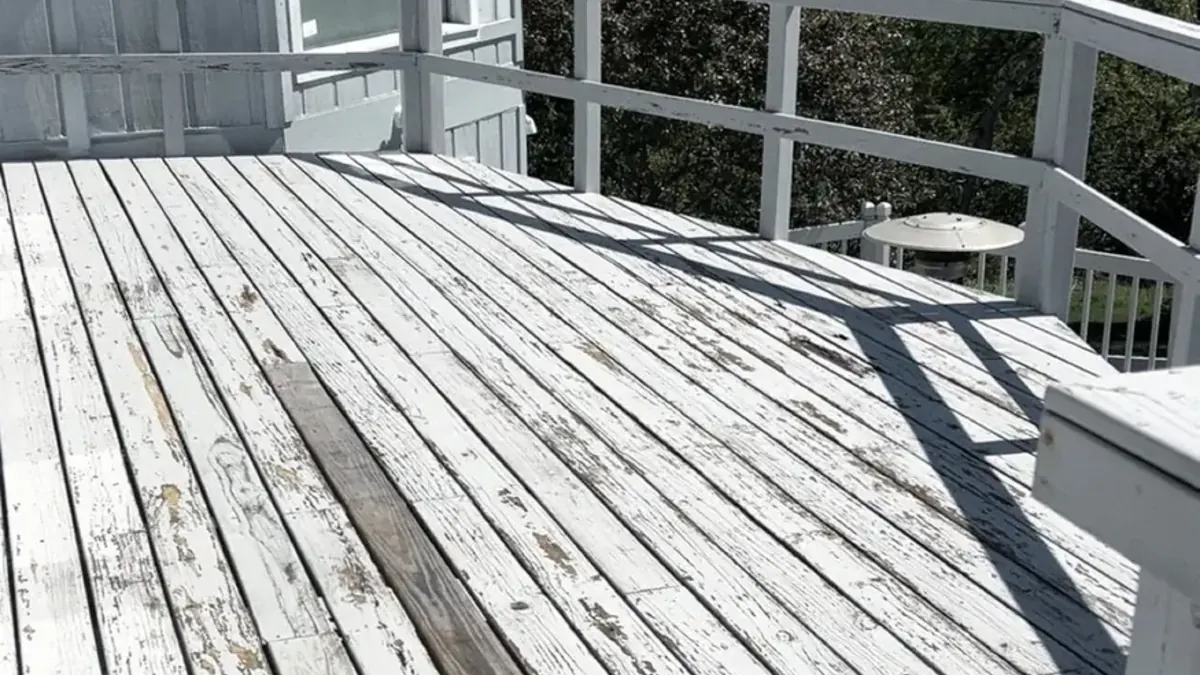
Washing ahead of a refinish is its own job. On a deck we refinished in New Richmond, the old white finish was peeling and worn to bare wood. That deck was pressure washed and scraped before anything else happened. Rotted decking was replaced where it needed it, then it was finished smooth in a pale gray, and the railings were repainted. The wash was step one of the prep, not the whole job. If your deck is at that point, our deck staining and repair work covers the full sequence.
How to vet whoever washes your house
It's easy to hire a washer off a flyer or a yard sign and never ask a question. Ask these before anyone starts.
- Do you use a cleaning solution, or just water and pressure? A washer who relies on force alone is the one most likely to fur the wood.
- How do you wash wood siding versus brick or concrete? If the answer is "the same way," keep looking.
- Which way do you spray on lap siding? You want to hear that they work with the laps, not up under them.
- How do you handle windows, vents, light fixtures and outlets? Those are the openings where water gets into the house.
- What do you cover? Plants, outdoor furniture, the AC unit and anything near the walls.
- Are you insured? If water gets into a wall, you want to know who pays. Wells Painting is fully insured and registered with the State of Ohio.
- Are you painting it after? If paint or stain is coming next, ask how long the wood dries before it goes on.
If a washer can't answer those without getting annoyed, that's your answer.
When to hire it out
Call before a wash if your siding is wood, the paint is already peeling, or you plan to repaint after. Washing peeling paint loosens more of it, and that changes the job from a cleaning into prep for an exterior painting job. It's better to know that at the estimate than halfway through the wash.
Call after a wash if you see fuzzy boards, stripes on the deck, or paint blistering near joints and window trim after the wash. Those don't fix themselves. The loose fibers and failed paint have to come off before a new finish will hold.
Questions homeowners ask
Can pressure washing permanently damage wood siding?
It can. Gouges cut into the board stay there. Furred grain can be taken back down before refinishing, but it won't go away by itself, and paint over it peels. Water pushed behind the siding can lead to blistering and peeling later.
Can you fix a deck that was power washed too hard?
Often, yes. The loose fibers come off, damaged or rotted boards get replaced where needed, and the deck gets a new finish. That's close to what the New Richmond deck went through. Deep gouges in a board may mean replacing that board.
Should I pressure wash my house before painting it?
The surface has to be clean for paint to stick, so cleaning comes first. The questions are how it's washed and how long it dries. Ask your painter both before the work starts, and ask whether the wash is part of the price they gave you.
If you've got wood siding or a deck that needs cleaning, or one that already got washed too hard, call (513) 849-5909 or reach us through our contact page. We'll look at it, and the estimate is free.